

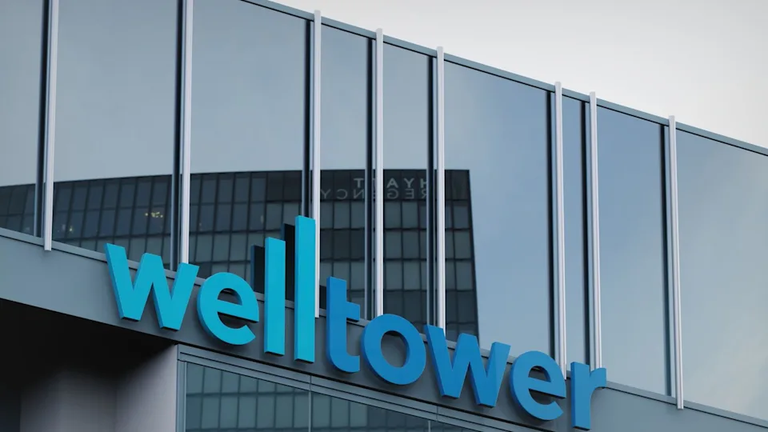
The majority of people purchase REITs for the steady dividend and slow and predictable growth. Neither does Welltower Inc. (WELL) offer either in the typical manner. The stock is currently trading at ~37x the middle of this year’s normalized FFO guidance, a valuation typically found in software companies, not landlords, and has a yield of ~1.4%. Shares have risen about a quarter this year, but are still about 7% below their 52-week high at ~$236.
The call is the day following the close on Monday, October 26, 2016, when Welltower reports Q3 2016 results (earnings date announcement). My opinion prior to entering: the business is running pretty much as well as any REIT out there and the stock reflects that. This quarter must go on two fronts. With the share count continuing to increase, the 20% plus growth in senior housing can’t be stalled in the busiest leasing season. Both hold, the premium is earned. Either one gets out of place, and there’s not a lot of margin in the price.
If you’re not as familiar with the name, the reason behind the story is this:
- Not only does it own, it’s a running senior housing. Welltower’s seniors housing operating (SHO) portfolio is comprised of the communities where it is a partner in the profits of the community, as opposed to fixed rent. That’s the reason moves this stock: occupancy and pricing.
- It’s compressing all the rest. Welltower is selling its outpatient medical buildings and putting the cash back into senior housing.
- It’s a record pace of buying. Year to date investment closed or under contract was $15.5 billion as of the Q2 report.
The raise in July was accompanied by a footnote.
First, let’s begin with what management has said to us last quarter. Normalized FFO (funds from operations – the REIT equivalent of earnings – adds back depreciation and excludes one-time items) increased 25% y/y to $1.60 per diluted share in Q2, the earnings release said. The same-store NOI (net operating income from properties owned for both periods) increased by 15.5% for the total portfolio, and 20.5% in SHO.
It’s in the SHO detail that the quality is evident. The revenue growth was driven by 330 bps of average occupancy growth and 5.2% higher revenue per occupied room (RevPOR), which led to 9.2% growth in organic same-store revenue. NOI increased by more than double that of revenue. That difference indicates that expenses were hardly changed and that is the type of operating leverage investors are willing to pay for.
Management then increased FFO guidance for full-year 2026 to $6.36-$6.44 per share from $6.21-$6.35. This is the second increase for the year, after the range had been increased from $6.09-$6.25 at Q1. SHO same-store NOI guidance moved to 18.5%-21.5%, from 16.5%-21.5% in April. During the call, CEO Shankh Mitra attributed the higher midpoint to a “increase in confidence in the back half of the year. Sequential spot occupancy increased 100 bps in the quarter, the latter part of which was “a strong beginning to the summer leasing season,” he added.
Now the footnote. GAAP net income guidance was cut to $3.11-$3.19 per share, from $3.24-$3.38. The release doesn’t detail why, but its guidance table indicates depreciation and amortization will increase to $2,845 million from $2,669 million due to new properties hitting the books. It’s a non-cash charge so I don’t see it as a red flag. It’s a reminder, though, that a considerable part of this growth is being purchased, rather than earned.
There are also conditions placed on the guidance. Only acquisitions which have been announced or completed are included. It assumes that $1.1 billion of disposition proceeds will be realized over the next 12 months at a blended yield of 6.8%, and assumes that no other capital moves have been announced.
The back half should be raised again
Let’s do the calculations. H1 normalized FFO was $3.07 ($1.47 in Q1 plus $1.60 in Q2). Hitting the full-year range means $3.29-$3.37 in H2. In this case I’m assuming a 50/50 split (this is my own interpretation and not company guidance) and that comes to ~$1.65-$1.69 on a quarterly basis. That would be 23%-26% above the $1.34 Welltower posted in Q3 2025, and another step up from Q2’s $1.60.
SHO guide allows for some leeway. SHO same-store NOI grew 22.1% in Q1 and 20.5% in Q2. Weighting the four quarters equally (another approximation) then a 20% FTM suggests growth closer to ~19% in H2. So management has added in some cooling which makes sense when compared to the following: Q3 2025 SHO NOI grew 20.3% on 400 bps of occupancy growth.
That’s the one occupancy line that I will be watching the most. Y/y occupancy gains have narrowed from 400 bps (Q3 2025) to 370 bps (Q1 2026) to 330 bps (Q2 2026). That is a natural progression with the build up of buildings. It does imply that more growth will need to be derived from price. As far as I’m concerned, the quarter is deemed healthy if:
- The occupancy growth remains around 300 bps y/y throughout the summer leasing season.
- RevPOR growth is 5% or higher.
- The growth of SHO NOI continues at a rate about twice that of SHO revenue.
- The full-year guidance steps up again, or at least towards the high end of the range.
What would make my read weak? Rising occupancy to the 200 bps mark, a guidance that was just reiterated, or deals that are still up for grabs that could be deferred into 2027.
The purchase of spree, greater shares
The most significant change since July is the way that Welltower is financing its growth. It filed an 8-K disclosing a new at-the-market (ATM) equity program – forward sales not included – totaling up to $7.5 billion, a day after the Q2 report. That’s ~4.4% of today’s ~$170 billion market cap.
It’s not a new behavior. The Q2 10-Q reflects ~$4.5 billion of net proceeds from the common stock issuance in H1. The weighted diluted shares in Q2 were 738.0 million, an increase of 10.4% y/y. However, FFO per share has increased by 25% during the same period. So far, the per-share math has proven to be correct.
The debt side appears to be quiet. Net debt to adjusted EBITDA was 2.99x as of quarter end, with the sale of C$1.15 billion of notes in July with a weighted coupon of 3.95% (8-K). The quarterly dividend also went up 15% to $0.85.
Eight properties are still on the selling side on the outpatient medical exit that the release says they should be able to close before year-end. Mitra was very up front on the call, saying that the near-term dilution from these sales “is a trade-off we will gladly make. I think it’s a sound argument. Senior housing NOI is trending at ~20% growth while outpatient NOI grew by 2.4% in Q2. But it adds pressure to the acquisitions to deliver.
Identifying and prioritizing risks and catalysts
1. Valuation (the highest risk factor). With the stock trading at ~37x FFO and a yield of ~1.4%, it appears to be on a trajectory of continued strong growth for years to come. Here is a scenario, not a prediction: At the same midpoint of $6.40, and the same multiple, it would be ~$192 per share, some 19% less than today. That’s not something that a good quarter will save you from. Only a positive attitude does.
2. Funding and dilution. The $7.5 billion ATM provides Welltower with the opportunity to continue to acquire, but each acquisition must now pass a cost of equity hurdle based on a 37x multiple. I’d like to hear on the call what the percentage is of the ~$6.1 billion in post quarter deals that have closed, what the first quarter yields are like, and what percentage of that is on new shares.
3. Occupancy plateau. A reduction in occupancy gains is not an issue in itself, but it does put the emphasis on pricing. But if RevPOR growth slows down as well, it becomes more difficult to defend the 20% NOI.
Before making your next move, analyze the stock in detail. See what the fundamentals suggest, where momentum is building or weakening, how the company compares against competitors, and whether insiders are buying or selling into the current trend into a single report in seconds.
4. Upside catalyst: 2027 pricing. Many operators of senior housing do provide next year’s rate increases at this time of year. The numbers of 2027 rents could be more significant for the stock than the Q3 results.
On October 27, the management will have to demonstrate what it has.
Management relied on the back half confidence and strong start to the summer leasing season in July. Q3 is the test. The metrics I will be interested in seeing: Do the summer occupancy improvements continue? Do the deals that are scheduled to close hold on schedule? Is the outpatient medical exit on schedule for year-end? I also want to see more of an explanation as to the difference between GAAP net income and normalized FFO with the increasing amount of acquisition-related depreciation.
My take into the print
I believe Welltower will be able to put up another solid quarter – double-digit FFO growth, SHO NOI around 20% and a guide that is held or raised. It is not the question, is the business. The price is. I’d become more bullish if the occupancy rate continues to grow around 300 bps, RevPOR remains above 5% and the full year guide increases once again. If the growth in occupancy slows down towards 200 bps and share issuance continues to grow, then I would get a bit nervous.
Discussion & Perspectives
Join the conversation and share your valuation thesis or technical insights.
Sign in to join the discussion
Only verified Tickzen members can publish comments and share research perspectives.
Loading comments…