

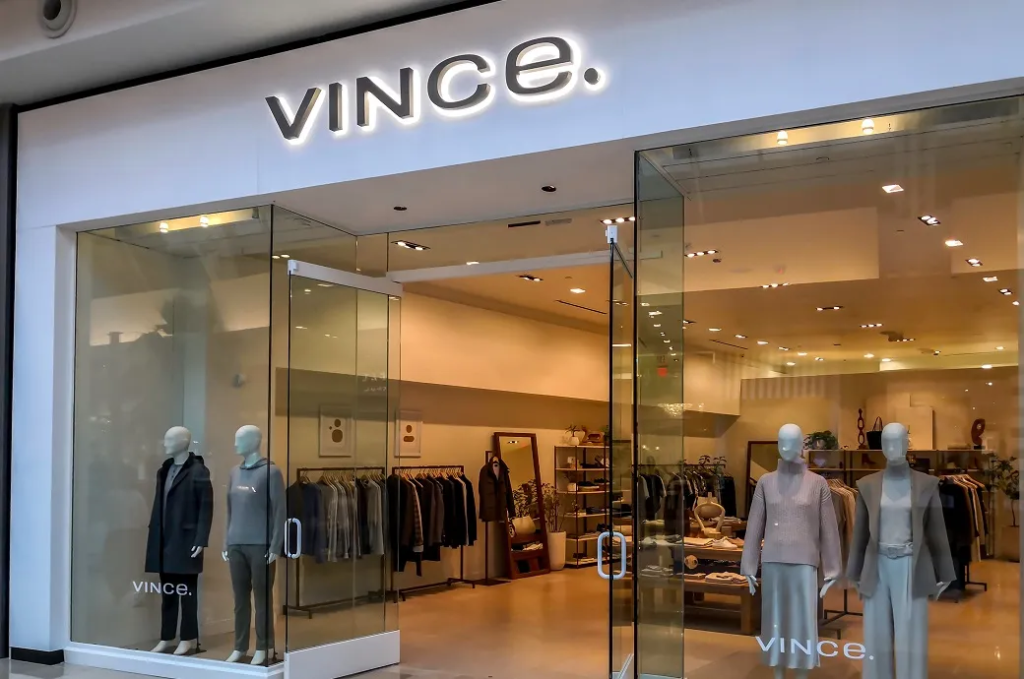
I think Vince Holding Corp. (NASDAQ: VNCE) is on the right course with the stock but it still needs some more proof before being more aggressive.
The main Vince business is making significant strides. Sales continue to increase on both wholesale and direct-to-consumer platforms, with direct-to-consumer profitability improving, and management has increased its fiscal 2026 sales guidance. Meanwhile, Vince has recently bought up October’s Very Own (OVO), adding a second brand that could contribute to a healthy growth over the coming years.
But there’s a key distinction between improved operating performance and a solid turnaround.
However, the most significant problem is that some of the recent margin improvement is attributable to a $10.4 million benefit due to IEEPA tariff refunds. Gross margin (excluding the benefit) was 48.2%, which was actually below the previous year’s figure. Management also anticipates greater product and freight cost pressures will continue.
That’s why the following part of the story is significant. Vince doesn’t have to just continue to increase sales. It must prove that the increase in sales can create sustainable margins, cash flow and returns without having to resort to short-term gains.
In light of that, I give Vince Hold a $8.62 rating. I can see a growing business and an interesting second growth story in OVO, but certainly haven’t got enough evidence to make a claim of turnaround.
The Core Vince Business Is Clearly Improving
The best aspect of the existing narrative is that improvement is occurring not from just one channel, but from the entire Vince business.
Total sales went up 11.7% in the second quarter to $81.8 million. The rise in wholesale sales was 10.4% with the rise in direct-to-consumer sales at 13.7%. Total sales in the first six months of fiscal 2026 amounted to $145.8 million, representing a growth of 11.1% compared to the same period last year.
The Customer to Customer business has become profitable, more important.
Comparable sales rose 18% and DTC sales grew 14.7% in the first half, to $64.4 million. The segment made an operating income of $6.3 million, whereas the same segment had an operating loss in the prior-year period of $0.6 million.
That’s important because comparable-sales growth is a better measure of the underlying health of the business than growth that is generated by opening more stores. With fewer stores Vince managed to achieve this improvement. The company operated 53 stores, down from 58 a year ago.
Vince, that is, is making more sales off of less square footage.
Wholesale is also on the upswing. The segment’s operating income rose 31.2% to $34.7 million and the first-half wholesale sales grew 8.6% to $81.5 million.
The bouncier wholesale demand and much improved DTC performance points to a healthier Vince brand in general a year later.
That’s the most significant aspect of my thesis.
The problem is that The Margin Improvement Needs To Be Normalized.
I don’t consider the latest results as proof of a “turnaround” completed because of how the gross-margin improvement was achieved.
Second-quarter gross margin increased to 60.9% from 50.4% a year ago. At first glance, it seems to be a significant improvement. Vince, however, took some $10.4 million from the IEEPA tariff refunds in the quarter. This benefit helped create the 1,380 basis-point gain in gross margin, management said.
If it wasn’t for that benefit, gross margin would have been 48.2%.
This is a new way for me to understand the quarter.
This business has obviously improved but the reported 60.9% margin is not to be seen as a normal margin of profitability for this business. The increase in product costs put an additional 160 basis points pressure on margin, while an additional 130 basis points pressure was caused by increased freight costs. The remaining tariff benefit is also expected to be offset by further product and freight-cost pressures in the second half, under management’s forecast.
The question to ask is, then, not, “Can Vince report a high gross margin in one quarter?”.
The true issue is if Vince will ever be able to generate a good margin without the temporary tariff advantages.
The litmus test for my investment thesis is that.
Revenue isn’t fully matching the earnings growth as yet
There’s another reason to be wary.
Sales rose 11.7%, but net income fell to about $10.6 million from about $12.1 million the same quarter the previous year.
It means that to me that growth is not sufficient.
Vince’s operating expenses increased significantly during the quarter. The cost of SG&A was $36.3 million, up from $25.8 million in the prior year. Part of the rise was due to the absence of last year’s $5.6 million Employee Retention Credit benefit and about $2.9 million was due to OVO transaction costs.
Some of these costs are definitely odd; I wouldn’t take these to be the new norm to take for granted.
However, the bottom line is still significant: Vince must prove that its results of enhanced sales will translate into steady profits once the one-time factors are no longer present.
I’m more interested in normalized operating margins than the gross-margin number, because that’s what I think matters more.
Cash Flow Is Better, But Working Capital Still Matters
Cash-flow has greatly improved.
Vince had operating cash flow of $9.2 million during the first six months of fiscal 2026, which contrasted with a negative cash flow of $7.6 million for the same period a year ago. Capital spending amounted to only approximately $1.0 million and operating cash flow after capital expenditures were approximately $8.3 million.
This is a significant improvement as a turnaround becomes more believable when there is a conversion of accounting earnings into cash.
I don’t think I could downplay working capital though.
At the end of the second quarter, the inventory was $73.4 million, up from $66.2 million at the end of fiscal 2025. Although inventories were down from the year before when they were valued at $76.7 million that is still a significant share of capital that is tied up in the business.
For a fashion business, inventory is a critical thing to keep track of since too much stock could eventually result in markdowns, reduced margins, and reduced cash flow.
As of now, I don’t consider the inventory position as a thesis breaker. I want to have sales increase faster than inventory over time, but I want to see that.
The Balance Sheet Is Manageable, Not Fortress-Like.
It is good news that Vince have reduced their traditional large debt.
The total value of the debt agreements that it has entered into, including borrowings, was about $12.3 million at the end of the second quarter, compared to $19.5 million at the end of fiscal year. Under the company’s revolving credit facility, the company also had excess availability of $63.6 million.
However, the balance sheet should be not so termed as being very strong.
Cash was only $1.0 million at August 1, 2026. In addition, Vince has a substantial amount of lease obligations with $16.8 million in current lease liabilities and $85.4 million in long-term lease liabilities.
This is a difference that must be recognized.
Traditional debt is at a fairly low level, but the company’s retail business still has significant fixed lease obligations. A less favorable sales environment could place a strain on cash generation if traditional borrowing can be kept in check.
I then consider the balance sheet to be “manageable” as long as the operating performance improves.
The value of the asset depends on what Vince makes after the normalization.
At $8.62, Vince isn’t looking cheap based on the headline earnings multiples, in my opinion, but he’s not a bargain, either.
This is because the value of a company is tied closely to what we think the normal earnings are going to look like.
The current valuation is more interesting if the company can achieve mid to high single-digits sales growth and eventually returns to the middle of management’s target operating margin. However, the recent margins are reliant on short-term tariff gains, whilst freight, product costs and corporate costs are high, making the bottomline less attractive than the headline numbers.
Management now sees 8% to 10% sales growth in Vince’s core business for fiscal 2026, while the adjusted operating margins are projected to be in the range of 7.5%-8.0% and the adjusted EBITDA margins are expected to be in the range of 9.0%-9.5%.
These goals are a good guide.
The stock does not need to see stunning gains in order to be successful. It requires the company to maintain the sales momentum and sustained normalized margins that management is looking for.
OVO Creates Significant Optionality
But the long story changes with the OVO acquisition.
Vince closed the deal on OVO’s operating business in August 2026. OVO has essentially reached the $50 million mark in calendar 2025 sales and Vince expects the brand to ultimately surpass $100 million in revenue, and reach low double-digit adjusted EBITDA margins by fiscal 2030.
I don’t consider it as an independent justification to the current valuation of OVO, but as an upside benefit.
The purchase will bring Vince a new customer base and a new brand image. Most importantly, OVO plans to leverage Vince’s existing infrastructure and capabilities within its sourcing, manufacturing, logistics and wholesale distribution processes in order to help it grow.
The company anticipates that OVO will be earnings neutral around fiscal 2026 and accretive in fiscal 2027 and onward.
It’s a crucial timeline.
Investors are not required to make any changes to the financial statements by using OVO. The big question, however, is whether Vince can leverage its infrastructure to expand OVO without incurring significant additional expenses.
In that case, OVO may one day be a substantial second revenue stream.
However, if implementation is substandard, the acquisition may be more complex and not generate the desired profit.
The Main Catalyst Is Margin Normalization
What’s most critical for me isn’t just a quarter of revenue growth.
It’s proof Vince can keep making a profit without cutting corners with tariff refunds.
The company is already on a positive sales trend. DTC comparable sales are up, wholesale is up and management has increased its full-year guidance.
The next step is to demonstrate that those sales gains can result in sustained profitability.
The current investment case becomes more interesting if Vince can continue the healthy sales growth and preserve the adjusted operating margins at the target range of 7.5%-8.0%.
Meanwhile, if OVO starts to deliver substantially in fiscal 2027, it could drive another earnings growth stream.
It would make it a changing narrative from turnaround to growth in a multi-brand platform.
Key Risks
The highest risk is margin pressure.
With product and freight costs likely to stay at higher levels, Vince could face challenges in delivering profit from revenue growth. The reported margin in the latest quarter demonstrated that temporary items can have a significant impact on the margin.
Some of the risks include inventory. Fashion companies don’t have the luxury of allowing inventory to grow faster than sales for any given amount of time as margins are set to be lost by markdowns.
Lease base is also a factor to consider. Vince has a heavy amount of leases and fixed costs with over $100 million worth of current and long-term leases.
Last but not least is OVO execution risk. The brand has potential but management needs to demonstrate that they can scale OVO with a healthy economics.
What would change My view?
If three things occurred I would be more constructive.
First, Vince shows that its core operating margin can sustain itself despite the benefits of tariffs going away.
Second, the operating cash flow continues to improve and inventories will be kept in check against sales.
Third, OVO is starting to pay in according to the timing as expected without needing too much investment.
However, if the margin continues to decline (as has been the case for the past few years), cash conversion is weak, or inventory levels are increasing or the OVO integration issue remains unresolved, then the thesis becomes unattractive.
Rating: Hold
I am giving Vince Holding Hold a rating of $8.62.
I don’t see the issue as being that the company is not growing. Actually, it’s quite the opposite. Those things that are the Vince core business are showing some real signs of life; DTC is beginning to turn a profit; wholesale is increasing; cash flow is getting better; and OVO has the potential to be a significant second growth platform.
What remains to be seen is the extent of the improvement that is sustainable in the market.
The tariff benefit was a big help to reported gross margin, but costs for products and freight continue to squeeze the underlying economics. Meanwhile, the balance sheet also has low cash and any significant lease liability.
So I’m not convinced that the evidence is there at this time to say that Vince is a proven turnaround.
Rather, I believe that I’m witnessing a company at a crucial moment.
It’s all about the core business, which is getting healthier. Financial arrangements are viable. OVO provides an opportunity for further development. But the next few quarters will have to show that Vince can convert those improvements into consistent earning and cash flow.
That’s why I am still at Hold.
Want to see whether this stock is still a buy at current levels? Run the full analysis to check fair value estimates, insider activity, technical signals, options positioning, support and resistance zones, and what analysts are expecting next in seconds.
The Vince story isn’t a matter of whether the company will grow or not anymore for me.
It’s a question of whether that growth can become sustainable, profitable and repeatable.
That’s the proof I would want to see before being more aggressive on the stock.
Discussion & Perspectives
Join the conversation and share your valuation thesis or technical insights.
Sign in to join the discussion
Only verified Tickzen members can publish comments and share research perspectives.
No comments yet. Start the conversation by sharing your thesis above.